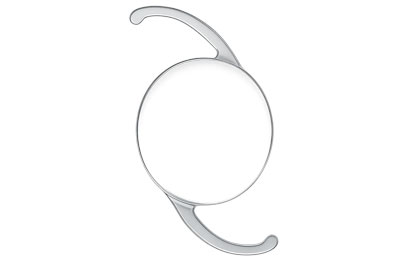
Our surgeons use advanced laser and lens technology to not only remove cataracts, but also help reduce or even eliminate your need for glasses.
Experience Clear Vision with Advanced IOLs
As we age, the eye’s natural lens can become cloudy and hardened, forming a cataract. During cataract surgery, the cloudy lens is removed and replaced with a clear intraocular lens (IOL). This restores clarity and provides you with a brand-new lens to see through.
Standard cataract surgery improves sight dramatically, but it doesn’t always correct other vision issues like astigmatism, which can still cause blurriness and make you rely on glasses. That’s why we offer advanced lens options designed to fine-tune your vision.
Monofocal lenses provide exceptional clarity for distance vision. These lenses can be set for clear viewing at either close range, medium range, or distance vision, but NOT all three. The main downside to monofocal lenses is that they can only be set to clear viewing at a single distance. If you have astigmatism, you will likely need glasses at all distances. Monofocal lenses are billable by insurance.
Toric Lens (for Correcting Astigmatism)
A toric lens provides clear distance vision while correcting astigmatism. You may need glasses for near and intermediate vision. It provides a more natural visual experience compared to standard lenses.
Toric lenses are for those with astigmatism, a condition in which the eye is not evenly round, leading to blurred vision. Toric lenses improve how the light hits your retina. You may need glasses for near and intermediate vision. This enhances the quality of your vision and reduces things like glare and halos. This lens does not correct for presbyopia or the ability to read without glasses, so reading glasses will still be needed.
If patients with astigmatism wish to reduce or eliminate the need for distance glasses following cataract surgery, the toric lens is an excellent option! This lens does not correct for presbyopia or the ability to read without glasses, so reading glasses will still be needed.
Multifocal/Trifocal/Extended Range of Focus Lens
Allows for vision at two or all three distances
High-performance lenses tailored to support an active lifestyle, from hobbies to daily activities, offering vision transitions between distances. TORIC versions are available.
When paired with femtosecond laser technology and low astigmatism correction, EDOF lenses deliver:
Sharper distance vision
Useful intermediate vision (for dashboard, computer, or kitchen tasks)
Reduced dependence on glasses
It’s a smart performance upgrade — especially for patients who want clarity and comfort without visual side effects.
What Results Can I Expect?
Modern cataract surgery has a success rate of over 98%, with most patients enjoying dramatically improved clarity, color, and contrast. With advanced IOLs, you may even enjoy the ability to read, drive, and watch TV without glasses. We’ll help you choose the technology that meets your needs.
Selecting your lens isn’t a one-size-fits-all decision. The right lens will depend on your eye health, lifestyle, and visual priorities. During your consultation, your cataract surgeon will discuss:
Your daily activities: Do you spend more time reading, driving, or using a computer?
Your visual goals: Would you like to be as independent from glasses as possible?
Your eye anatomy and corneal shape: Which lens will provide the most precise correction?
Your budget and insurance coverage: What premium options are available to you?
Advanced Cataract Surgery with Laser Precision
Traditional cataract surgery is one of the most successful procedures performed worldwide. But at West Texas Eye Associates, we take it a step further with advanced femtosecond laser technology—a precision-guided system that enhances safety, accuracy, and outcomes.
Benefits of Laser Cataract Surgery:
Personalized precision: The laser creates exact incisions and gently softens the cataract for a smoother removal process.
Improved safety and accuracy: Computer-guided imaging allows our surgeons to customize treatment to your unique eye anatomy.
Better vision outcomes: When combined with advanced IOLs, laser-assisted surgery can fine-tune your visual results, reducing your need for glasses.
This advanced technology ensures that your surgery is tailored to your vision and comfort—an investment in long-term clarity.
Experience Life Without the Blur
If you’re struggling with cloudy vision or glare, now is the perfect time to take the next step. Schedule your cataract evaluation at West Texas Eye Associates in Lubbock today. Our experts will help you explore your advanced cataract surgery and lens options, so you can see more clearly and live more fully.
Advanced technology intraocular lenses (IOLs) are premium lens implants that do more than restore clarity after cataract removal. They can correct astigmatism, presbyopia (age-related near-focus loss), and even provide vision at multiple distances—reducing or eliminating the need for glasses or contacts.
A standard monofocal lens restores clear vision at one distance (usually far) but still requires glasses for reading or computer work. Advanced lenses, such as toric, multifocal, trifocal, or extended-depth-of-focus (EDOF) lenses, provide a broader range of vision and sharper contrast across multiple focal points.
At West Texas Eye Associates, we offer:
Toric lenses – Correct astigmatism for sharper distance vision.
Multifocal lenses – Provide clear vision at near and far distances.
Trifocal and EDOF lenses – Deliver a continuous range of vision with fewer visual side effects like halos or glare.
Each option is selected based on your eye anatomy and lifestyle goals.
Advanced intraocular lenses are designed to last a lifetime. Once implanted, they do not degrade or wear out. The results are permanent—although some patients may later develop a minor “secondary cataract” (posterior capsule haze), which can be easily treated with a simple, one-time laser procedure.
Basic (monofocal) cataract surgery is typically covered by insurance, including Medicare, but advanced lenses are considered elective upgrades. That means the lens upgrade portion is an out-of-pocket cost. During your consultation, we’ll review pricing and financing options in detail.
To provide the best experiences, we use technologies like cookies to store and/or access device information. Consenting to these technologies will allow us to process data such as browsing behavior or unique IDs on this site. Not consenting or withdrawing consent, may adversely affect certain features and functions.
Functional
Always active
The technical storage or access is strictly necessary for the legitimate purpose of enabling the use of a specific service explicitly requested by the subscriber or user, or for the sole purpose of carrying out the transmission of a communication over an electronic communications network.
Preferences
The technical storage or access is necessary for the legitimate purpose of storing preferences that are not requested by the subscriber or user.
Statistics
The technical storage or access that is used exclusively for statistical purposes.The technical storage or access that is used exclusively for anonymous statistical purposes. Without a subpoena, voluntary compliance on the part of your Internet Service Provider, or additional records from a third party, information stored or retrieved for this purpose alone cannot usually be used to identify you.
Marketing
The technical storage or access is required to create user profiles to send advertising, or to track the user on a website or across several websites for similar marketing purposes.