Posterior Vitreous Detachment: What It Is, What To Watch For, And How West Texas Eye Associates Can Help
Posterior vitreous detachment is a common, age-related eye change that often causes new floaters, brief light flashes, or a hazy “cobweb” in your vision. Most posterior vitreous detachments are benign and heal without surgery, yet a small percentage can tug on the retina and lead to a tear or retinal detachment. This guide explains exactly what is happening, when it occurs, how we evaluate you the same day when needed, and what treatment and aftercare look like at West Texas Eye Associates.
What Is Posterior Vitreous Detachment?
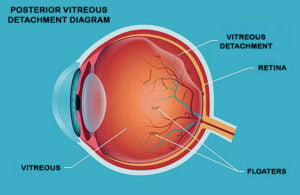
The vitreous is the clear gel that fills the center of the eye. With time, the gel liquefies and separates from the retina. When the back surface of that gel peels away, it is called a posterior vitreous detachment, or PVD. The separation itself is not harmful, but traction during the process can irritate the retina and create symptoms.
Why And When It Happens
Most often appears after age 50 and is very common after age 60.
Happens earlier with nearsightedness, prior eye surgery such as cataract, trauma, or inflammatory eye disease.
It can occur in one eye first, then the fellow eye months to years later.
Classic Symptoms You Might Notice
Sudden increase in floaters that look like spots, cobwebs, or a ring.
Brief, recurring flashes at the side of vision in dim light.
A small blur or smudge that drifts with eye movement. Seek urgent care if you see a curtain or shadow, a shower of new floaters, persistent flashing, or a sudden drop in vision. These can signal a retinal tear or detachment.
How We Diagnose It
Targeted history and visual acuity.
Dilated retinal examination with scleral depression to look for tears.
Optical coherence tomography when used to assess the vitreomacular interface.
Widefield imaging to document the peripheral retina.
Care Plan At West Texas Eye Associates
Most uncomplicated PVDs do not require surgery. Your plan is customized to your risk and your symptoms.
Education And Monitoring
We explain warning signs and provide a written “watch list.”
Follow-up exam in 1 to 6 weeks, sooner if symptoms increase.
Treating Related Problems
If we find a small retinal tear, we usually seal it in the clinic with a laser to prevent detachment.
If there is vitreous hemorrhage or limited view, we monitor closely or consider ultrasound imaging.
When Surgery Is Considered
Pars plana vitrectomy is reserved for complications such as a non-clearing vitreous hemorrhage, a macular hole, a significant epiretinal membrane, or a retinal detachment.
Your surgeon explains benefits, risks, anesthesia, and recovery expectations in plain language.
Aftercare And Recovery
Most symptoms settle over weeks as the vitreous separation completes and the brain adapts to remaining floaters.
Avoid high-impact activities for a short period if advised.
Call immediately for new flashes, a sudden shower of floaters, a gray curtain, or worsening blur.
PVD And Retinal Detachment Risk
A minority of PVDs create a retinal tear. Untreated tears can progress to retinal detachment, which is sight-threatening. Prompt evaluation and, when indicated, laser treatment greatly reduce this risk. If a detachment is present, surgery is required and is time sensitive.
When To Call Same Day
A brand-new burst of floaters
Repeating flashes in one eye
A shadow or curtain from any direction
Sudden drop in vision
FAQ on PVD
What causes posterior vitreous detachment?
Natural aging of the vitreous gel, earlier with nearsightedness, after eye surgery, or with trauma.
Does posterior vitreous detachment go away?
The separation is complete. Flashes fade and many floaters become less noticeable as your brain adapts.
How long do symptoms last?
Flashes often settle within days to weeks. Floaters may persist but usually become less distracting over weeks to months.
Can a posterior vitreous detachment cause blindness?
PVD itself does not. A retinal tear or detachment that sometimes follows can threaten vision. Early laser or surgery prevents most vision loss.
When is surgery needed?
Not for routine PVD. Surgery is considered for complications such as a significant retinal detachment, persistent vitreous hemorrhage, macular hole, or traction.
Can I exercise?
Light activity is usually fine. Avoid heavy lifting or high-impact exercise if you have acute symptoms until your doctor clears you.
West Texas Can Help
Most posterior vitreous detachments are part of normal aging and improve without surgery. What matters is ruling out a tear early and protecting your retina. If you have new floaters or flashes, the retina team at West Texas Eye Associates can see you quickly, explain every step, and keep you safe.
Regular eye exams can help detect changes in your vision and signs of eye disease before they begin affecting your everyday life. Schedule your appointment online or call (806) 792-5900 to take the next step in preserving your sight and maintaining healthy vision.
To provide the best experiences, we use technologies like cookies to store and/or access device information. Consenting to these technologies will allow us to process data such as browsing behavior or unique IDs on this site. Not consenting or withdrawing consent, may adversely affect certain features and functions.
Functional
Always active
The technical storage or access is strictly necessary for the legitimate purpose of enabling the use of a specific service explicitly requested by the subscriber or user, or for the sole purpose of carrying out the transmission of a communication over an electronic communications network.
Preferences
The technical storage or access is necessary for the legitimate purpose of storing preferences that are not requested by the subscriber or user.
Statistics
The technical storage or access that is used exclusively for statistical purposes.The technical storage or access that is used exclusively for anonymous statistical purposes. Without a subpoena, voluntary compliance on the part of your Internet Service Provider, or additional records from a third party, information stored or retrieved for this purpose alone cannot usually be used to identify you.
Marketing
The technical storage or access is required to create user profiles to send advertising, or to track the user on a website or across several websites for similar marketing purposes.