Thyroid Eye Disease

Thyroid eye disease can affect how your eyes look, feel, and function.

Request Consultation

Thyroid eye disease, or TED, is an inflammatory condition that affects the muscles, fat, eyelids, and the soft tissues around the eyes. Many people hear different terms for the same condition, including:

  • Thyroid eye disease
  • TED disease
  • Graves’ eye disease
  • Graves’ ophthalmopathy
  • Graves’ orbitopathy
  • Thyroid-associated orbitopathy


While TED is often connected to Graves’ disease, the thyroid and the eyes are not always active at the same time. Some patients develop eye symptoms before they know they have a thyroid condition. Others may have thyroid eye disease even after their thyroid levels are being treated.

Play Video
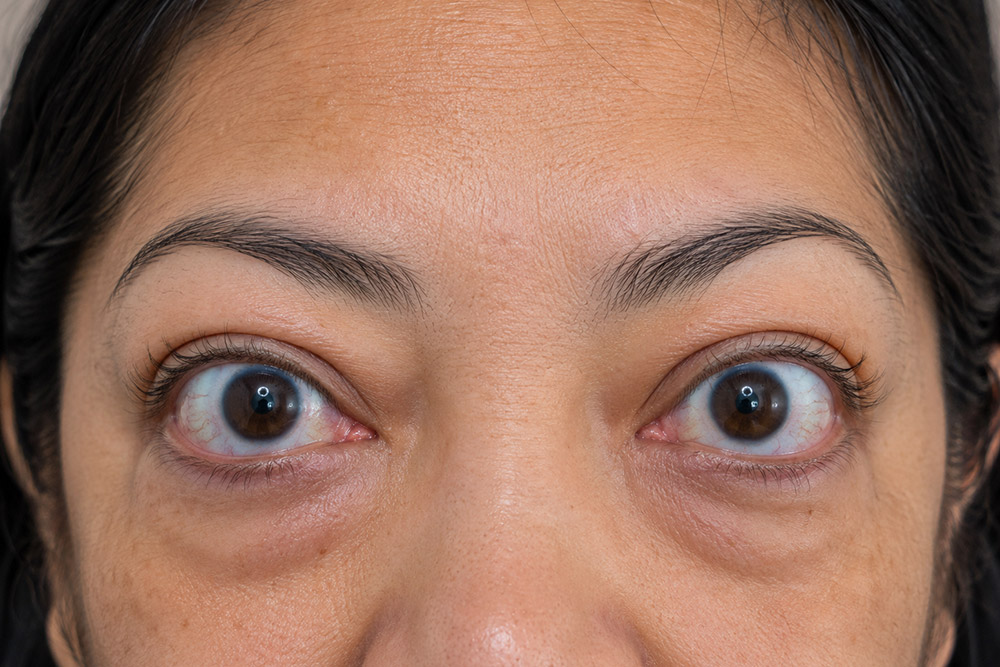
Close-up of a Mexican adult with prominent eyes, mild eyelid retraction, and subtle under-eye puffiness associated with thyroid eye disease.

Signs and Symptoms of Thyroid Eye Disease

Common symptoms of thyroid eye disease may include:

  • Bulging eyes or an eye that appears more prominent
  • Puffy eyelids or swelling around the eyes
  • Eyelid retraction, where the eyelids appear too open
  • Dryness, burning, watering, or irritation
  • Redness or inflammation
  • Pressure or aching behind the eyes
  • Sensitivity to light
  • A gritty or sandy feeling
  • Double vision
  • Trouble moving the eyes comfortably
  • Difficulty closing the eyes fully
  • Changes in vision
  • A tired, startled, or “wide-eyed” appearance

For some patients, the first signs are subtle: dry eyes, irritation, eyelid puffiness, pressure behind the eyes, or a tired appearance.

Early symptoms may come and go, making TED easy to overlook. If you have a thyroid condition and your eyes suddenly feel different, look different, or become uncomfortable, it is a good idea to schedule an eye evaluation.

TED can develop when the immune system mistakenly attacks the muscles and tissues around the eyes, leading to symptoms such as inflammation, swelling, and bulging eyes.

Thyroid eye disease symptoms can vary from person to person. Some patients have mild thyroid eye disease with dryness and eyelid swelling. Others may develop more advanced changes that affect vision, comfort, or appearance.

Dark eye Indian Arabian woman cropped view healthy girl female look gaze health medicine clinic laser correction ophthalmology looking at camera eyesight make-up indoor.

Dr. Coby Ray may perform surgery when your thyroid eye disease has caused lasting changes to the eyelids, eye position, or surrounding tissues that affect comfort, vision, or appearance. Patients usually first try non-surgical treatment options with their TED specialist to help manage inflammation and symptoms. Once the active inflammatory phase of TED has stabilized, surgical treatment may be recommended.

Types of Thyroid Eye Disease Surgery

Thyroid eye disease can affect several areas around the eyes, so that surgical treatment may involve one or more procedures. Dr. Ray evaluates each patient’s anatomy, symptoms, disease stability, and goals before recommending a plan.

Orbital decompression may be recommended when thyroid eye disease causes the eyes to bulge forward. This happens when swelling, enlarged muscles, or expanded tissue inside the orbit push the eye outward.

During orbital decompression surgery, space is created within the eye socket to allow the eye to settle into a more natural position. This can reduce the appearance of bulging eyes and may help relieve pressure or exposure symptoms. Orbital decompression is a highly individualized procedure. The amount of correction depends on the severity of the thyroid eye disease, the patient’s anatomy, and the surgical goals.

Patients may consider orbital decompression if they have:

  • Prominent or bulging eyes
  • Eye pressure related to TED
  • Difficulty closing the eyelids
  • Corneal exposure
  • Significant appearance changes
  • Crowding within the orbit

Eyelid retraction is one of the most common manifestations of thyroid eye disease. It occurs when the upper eyelid pulls too high, the lower eyelid pulls too low, or both. This can make the eyes look unusually open or startled.

Eyelid retraction can also cause functional problems. When the eyelids do not cover the eye properly, the eye’s surface can become dry, irritated, red, or sensitive to light.

Eyelid retraction repair is designed to improve eyelid position so the eyes are better protected and appear more natural. This procedure may help patients with:

  • Upper eyelids that sit too high
  • Lower eyelids that sit too low
  • Difficulty closing the eyes
  • Dryness from exposure
  • A wide-eyed appearance
  • Eye irritation caused by poor eyelid coverage

Thyroid eye disease can cause puffiness, swelling, or fullness around the eyelids. Even after the active phase improves, some patients are left with changes in the upper or lower eyelids.

Surgery may be used to address extra tissue, eyelid heaviness, or contour changes caused by TED. In some cases, this may involve upper eyelid surgery, lower eyelid surgery, or a customized approach to improve symmetry and eyelid shape.

Patients often describe these symptoms as “thyroid puffy eyelids,” “thyroid tired eyes,” or “hypothyroidism puffy eyes.” While not every case of eyelid puffiness is related to TED, Dr. Ray can evaluate whether surgical correction may help.

Some patients with thyroid eye disease develop double vision because the eye muscles become enlarged, scarred, or restricted. Dr. Ray may coordinate care with other specialists when double vision surgery or additional eye muscle treatment is needed.

For patients who require multiple procedures, TED surgery is often staged in a specific order. Orbital surgery is typically considered first, followed by eye muscle surgery if needed, and then eyelid surgery. This staged approach helps create more predictable results.

Schedule a Thyroid Eye Disease Surgery Consultation

If thyroid eye disease, Graves’ eye disease, or TED has changed your eyelids, eye position, comfort, or appearance, surgical care may help. Dr. Coby Ray, MD, FACS, provides oculofacial surgery at West Texas Eye Associates for patients with TED-related eyelid and orbital concerns.

Why Timing Matters With TED Surgery

Timing is one of the most important parts of thyroid eye disease surgery. TED often has an active phase, during which inflammation and tissue changes continue to progress, followed by a more stable phase.

Surgery is often most predictable once the disease has stabilized. If eyelid position, eye prominence, or double vision is still changing, Dr. Ray may recommend monitoring, medical management, or coordination with other providers before moving forward with surgery.

That said, not every patient follows the same path. Some patients may need earlier intervention if the eye surface or vision is at risk. Others may benefit from waiting until measurements and symptoms have remained stable.

Dr. Coby Ray’s Approach to Thyroid Eye Disease Surgery

Dr. Coby Ray, MD, FACS, specializes in oculofacial surgery, including procedures of the eyelids, orbit, and surrounding facial structures. For thyroid eye disease patients, his approach is centered on improving function, protecting the eye, and helping restore a more natural appearance.

TED surgery requires careful planning because even small changes in eyelid position or eye prominence can affect comfort, vision, and facial expression. Dr. Ray evaluates the full picture: eye position, eyelid closure, eyelid height, orbital changes, dryness, symmetry, and patient goals.

His surgical recommendations are based on what thyroid eye disease has changed and what can realistically be improved with surgery.

What to Expect During a Surgical Consultation

During your consultation, Dr. Ray will review your history of thyroid eye disease, prior treatments, current symptoms, and your goals for surgery. He may evaluate:

  • Eyelid position
  • Eye prominence
  • Eyelid closure
  • Eye surface health
  • Symmetry between the eyes
  • Signs of exposure or dryness
  • Double vision symptoms
  • Prior imaging or thyroid-related records
  • Whether TED appears stable enough for surgery

The consultation is also a time to discuss what surgery can and cannot accomplish. Some patients are looking for relief from irritation or exposure. Others are most bothered by bulging eyes, eyelid retraction, or facial changes. Many patients have both functional and appearance-related concerns.

Is Thyroid Eye Disease Surgery Cosmetic or Medical?

Thyroid eye disease surgery may be functional, reconstructive, cosmetic, or a combination of these. If TED affects eyelid closure, exposure of the eye, vision, or orbital pressure, surgery may be medically necessary. If the primary concern is appearance after the disease has stabilized, surgery may be purely cosmetic.

In many cases, the line between functional and cosmetic is not simple. A patient with bulging eyes may also have dryness and exposure. A patient with eyelid retraction may also feel self-conscious about a wide-eyed appearance. A thoughtful surgical plan should consider both how the eyes function and how the patient feels about their appearance.

Thyroid Eye Disease Before and After Surgery

Many patients search for “thyroid eye disease before and after” to learn what kinds of improvements are possible. Results vary based on the severity of TED, the procedures performed, the patient’s anatomy, and whether the disease is stable.

Surgery may help improve eye prominence, eyelid position, symmetry, exposure symptoms, and the overall appearance of the eyes. However, TED surgery is highly individualized. A consultation with Dr. Ray is the best way to understand what may be realistic for your situation.

Locations

3611 50th St
Lubbock, TX 79413

Clinic

12210 Quaker Ave
Lubbock, TX 79424

Clinic

5109 80th St
Lubbock, TX 79424

Surgery Center

Doctors

Coby Ray, MD, FACS
Coby Ray, MD, FACS

Director of Aesthetics and Cosmetic Surgery, Oculoplastic Surgeon