Cataract Lens Options: How To Choose the Right Lens for Your Vision
Cataract lens options can shape how clearly you see after cataract surgery, how much you may rely on glasses, and how well your vision supports daily life. During cataract surgery, your cloudy natural lens is removed and replaced with a clear artificial lens called an intraocular lens. The right lens depends on your eye health, astigmatism, lifestyle, vision goals, and budget.
For many patients in Lubbock and across West Texas, cataract surgery is not only about removing cloudy vision. It is about getting back to the things that make life feel full and familiar, like driving with confidence, reading comfortably, working at a screen, watching television, cooking, traveling, or seeing loved ones more clearly.
At West Texas Eye Associates, your cataract evaluation helps your surgeon understand how you use your vision every day. From there, your care team can explain which cataract lens options may best fit your eyes, goals, and expectations after surgery.
What Are Your Cataract Lens Options?
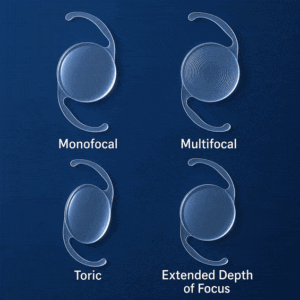
Cataract lens options are the different types of intraocular lenses that can replace the cloudy natural lens during cataract surgery. Each lens is designed to support vision in a different way.
Some lenses focus light at a single distance. Others may help patients see across more than one range, such as distance, intermediate, and near vision. Some are designed to correct astigmatism, which can make vision look blurry, stretched, or less crisp.
Your surgeon will recommend lens options after reviewing your measurements, retinaland corneal health, astigmatism, prescription, and lifestyle needs. The goal is to choose a lens that supports clearer vision while setting realistic expectations for how you may use glasses after surgery.
Why Your Cataract Lens Choice Matters
Your choice of cataract lens can affect your vision after surgery. A patient who mainly wants clearer distance vision for driving may have different needs than someone who reads often, works at a computer, plays cards, sews, or wants to reduce glasses use across several activities.
This is why lens selection is a personal decision. There is no single best cataract lens for every patient. The best option is the one that fits your eye health, your day-to-day routines, and the way you want to use your vision after surgery.
During your consultation, your surgeon may ask about your hobbies, work, screen time, night driving, and comfort with glasses. Those details help connect the lens recommendation to your real life.
Standard Monofocal Lenses
A standard monofocal lens is designed to focus vision at one main distance. Many patients choose distance vision, then use glasses for reading, computer work, or other close-up tasks.
This is often the most straightforward cataract lens option. It can help restore clearer vision after the cloudy natural lens is removed, but it does not usually provide a broad range of vision on its own. It may also leave some patients needing glasses if they have astigmatism or want clearer near and intermediate vision.
A standard monofocal lens may be a good fit for patients who want cataract surgery to improve cloudy vision and are comfortable using glasses for certain tasks afterward.
Expanded Range Of Vision Lens Options
An expanded range of vision lens options is designed for patients who want support across more than one distance after cataract surgery. Depending on the patient’s eyes and the surgeon’s recommendation, these may include multifocal, trifocal, or extended-depth-of-focus lens technology.
These lenses may help with distance, intermediate, and near vision. That can matter if you want more freedom for activities like driving, checking your phone, reading a menu, using a computer, or enjoying hobbies without reaching for glasses as often.
An expanded range of vision lenses may be worth discussing if your goal is to reduce dependence on glasses after cataract surgery. However, they are not right for every eye. Your surgeon will review your eye health and explain possible tradeoffs, such as glare, halos, contrast changes, or the continued need for glasses for certain tasks.
Toric Lens Options For Astigmatism
A toric lens is designed for patients with astigmatism. Astigmatism happens when the shape of the eye causes light to focus unevenly. This can make vision look blurry, distorted, or less sharp at certain distances.
If cataract surgery removes the cloudy lens but astigmatism remains uncorrected, vision may still feel less crisp than expected. A toric lens can help correct astigmatism during cataract surgery, potentially improving clarity and reducing the need for glasses for some patients.
Your surgeon will measure your astigmatism before surgery and explain whether a toric lens is a good option for your eyes. For patients with significant astigmatism, this can be an important part of the cataract lens conversation.
Monofocal Lens Options With Astigmatism Correction
Some patients want more than traditional cataract surgery, but may not need the broadest range-of-vision lens. In those cases, your surgeon may discuss a monofocal lens plan that also addresses lower levels of astigmatism.
This type of plan may support a clearer vision at a single distance while also reducing astigmatism-related blur. It can be a helpful middle ground for patients who want a more customized result but do not need a multifocal, trifocal, or extended-depth lens option.
Your surgeon can explain whether your astigmatism level, eye shape, and vision goals make this approach appropriate.
Laser-Assisted Cataract Surgery And Lens Planning
Some cataract surgery plans may include laser-assisted technology. Laser-assisted cataract surgery may be used to support certain steps of the procedure and may be recommended based on your anatomy, lens choice, astigmatism, or the surgeon’s plan.
Not every patient needs laser-assisted cataract surgery. It is one part of a larger conversation about lens selection, surgical planning, and expected vision after surgery.
If laser-assisted cataract surgery is recommended, your care team can explain why it may help and whether it affects your out-of-pocket cost.
How To Match A Lens Option To Your Lifestyle
The right lens choice should reflect how you actually use your eyes. Before your cataract consultation, think about the activities that matter most to you.
For some patients, the top priority is driving around Lubbock or across West Texas with clearer distance vision. For others, it may be reading medication labels, using a phone, working at a computer, watching television, playing golf, cooking, woodworking, sewing, or traveling with less dependence on glasses.
The more specific you are about your daily life, the easier it is for your surgeon to explain which cataract lens options may support your goals. This conversation also helps you understand where glasses may still be needed after surgery.
Who Is A Good Candidate For Advanced Cataract Lens Options?
You may be a candidate for advanced cataract lens options if you have cataracts and want to reduce your dependence on glasses after surgery. You may also be a candidate if you have astigmatism that can be corrected during cataract surgery.
A good candidate usually has realistic expectations, healthy enough eyes for the selected lens, and a clear understanding that no lens can guarantee perfect vision at every distance. Some patients still need glasses for night driving, fine print, or certain close-up tasks.
Not every lens is safe or effective for every patient. Retina conditions, cornea concerns, dry eye, glaucoma, severe astigmatism, or other eye health issues may affect which lens your surgeon recommends. Your cataract evaluation helps identify those factors before surgery.
Lens Questions To Ask Your Eye Doctor
Your cataract consultation is the best time to compare lens options and understand what each one can and cannot do. Bring your questions with you so the conversation stays focused on your goals.
Which cataract lens options fit my eyes?
Do I have astigmatism?
Would astigmatism correction improve my result?
Will I still need glasses after cataract surgery?
Which lens option best fits my daily activities?
Are there any potential trade-offs, such as glare, halos, or changes in night vision?
What costs may be my responsibility?
Is laser-assisted cataract surgery recommended for my eyes?
A strong lens conversation should leave you with a clear understanding of your options, expected benefits, possible limitations, and cost considerations.
What To Expect At A Cataract Lens Consultation
At West Texas Eye Associates, your cataract evaluation helps your surgeon determine whether cataract surgery is appropriate and which lens options may best suit your needs.
Your visit may include a comprehensive eye exam, detailed eye measurements, astigmatism testing, a review of your eye health history, and a discussion about how cataracts affect your daily life. Your care team may also talk with you about insurance, out-of-pocket costs, and what to expect before and after surgery.
This process helps your surgeon build a personalized plan rather than a one-size-fits-all recommendation.
Why Choose West Texas Eye Associates For Cataract Lens Options?
West Texas Eye Associates provides cataract care for patients in Lubbock and across West Texas, with a focus on personalized lens planning and advanced cataract technology. The goal is to help you understand your choices before surgery so you can feel more confident about your vision plan.
Cataract surgery is a major decision, but you do not have to make it alone. Your care team can explain what is happening inside your eye, which lens options may fit your goals, and what to expect as you move from evaluation to surgery and recovery.
Take The Next Step Toward A Clearer Vision Plan
Cataract lens options can help you choose a cataract surgery plan that fits your vision, lifestyle, and expectations. If cloudy vision, glare, faded colors, or night driving problems are affecting your daily life, schedule a cataract evaluation with West Texas Eye Associates in Lubbock to discuss your lens options and take the next step toward clearer vision.
FAQ: Cataract Lens Options
Cataract lens options are the different artificial lenses that can replace your cloudy natural lens during cataract surgery. These lenses are called intraocular lenses. Options may include standard monofocal lenses, an expanded range of vision lenses, and toric lenses for astigmatism.
The best lens option depends on your eye health, astigmatism, lifestyle, and vision goals. Some patients do well with a standard monofocal lens, while others may benefit from an advanced technology lens that offers a wider range of vision or astigmatism correction.
You may still need glasses after cataract surgery, depending on your lens choice and vision goals. Standard monofocal lenses often require glasses for some tasks. Advanced lens options may reduce dependence on glasses, but they do not guarantee that glasses will never be needed.
At West Texas Eye Associates in Lubbock, cataract patients can discuss standard monofocal lenses, an expanded range of vision lenses, and toric or astigmatism-correcting options. Your surgeon will recommend lens options after a full exam and precise eye measurements.
Toric lenses are designed to correct astigmatism during cataract surgery. They may help patients with astigmatism achieve sharper, more balanced vision after cataract removal and may reduce dependence on glasses for astigmatism correction.
Multifocal, trifocal, or extended-range of vision lenses may be worth discussing if you want to reduce your dependence on glasses for more daily activities. These lenses may support distance, intermediate, and near vision, but not every patient is a good candidate.
Insurance often helps cover medically necessary cataract surgery with a standard lens, depending on the plan. Advanced technology lenses, astigmatism correction, and laser-assisted upgrades may involve out-of-pocket costs. Your care team can review your benefits before surgery.
Start by thinking about your daily vision needs, such as driving, reading, computer use, hobbies, and your dependence on glasses. Then schedule a cataract evaluation with West Texas Eye Associates. Your surgeon can review your measurements, eye health, astigmatism, and lens options.
Related Posts
Protect Your Vision: Schedule an Eye Exam
Regular eye exams can help detect changes in your vision and signs of eye disease before they begin affecting your everyday life. Schedule your appointment online or call (806) 792-5900 to take the next step in preserving your sight and maintaining healthy vision.
To provide the best experiences, we use technologies like cookies to store and/or access device information. Consenting to these technologies will allow us to process data such as browsing behavior or unique IDs on this site. Not consenting or withdrawing consent, may adversely affect certain features and functions.
Functional
Always active
The technical storage or access is strictly necessary for the legitimate purpose of enabling the use of a specific service explicitly requested by the subscriber or user, or for the sole purpose of carrying out the transmission of a communication over an electronic communications network.
Preferences
The technical storage or access is necessary for the legitimate purpose of storing preferences that are not requested by the subscriber or user.
Statistics
The technical storage or access that is used exclusively for statistical purposes.The technical storage or access that is used exclusively for anonymous statistical purposes. Without a subpoena, voluntary compliance on the part of your Internet Service Provider, or additional records from a third party, information stored or retrieved for this purpose alone cannot usually be used to identify you.
Marketing
The technical storage or access is required to create user profiles to send advertising, or to track the user on a website or across several websites for similar marketing purposes.