Symptoms of an Orbital Tumor or Mass
Orbital tumors can develop slowly, and early symptoms may be subtle. Some patients first notice that one eye looks different from the other. Others are referred after an eye exam, CT scan, MRI, or evaluation for double vision, swelling, or unexplained pressure around the eye.
Common symptoms of an orbital tumor may include:
- Eye bulging or one eye appearing pushed forward
- Swelling around the eyelid or eye socket
- A visible or palpable lump near the eye
- Double vision
- Pain, pressure, or aching around the eye
- Trouble moving the eye normally
- Droopy eyelid
- Change in eyelid position
- Redness or irritation
- Blurred vision
- Decreased vision
- New headaches or pressure behind the eyes
- Changes in the appearance or position of the eye
Patients should seek prompt evaluation if they experience sudden vision changes, rapidly worsening eye bulging, new double vision, significant pain, or swelling that continues to progress. These symptoms do not always mean cancer is present, but they do need careful attention.
Why Orbital Tumors Require Specialized Care
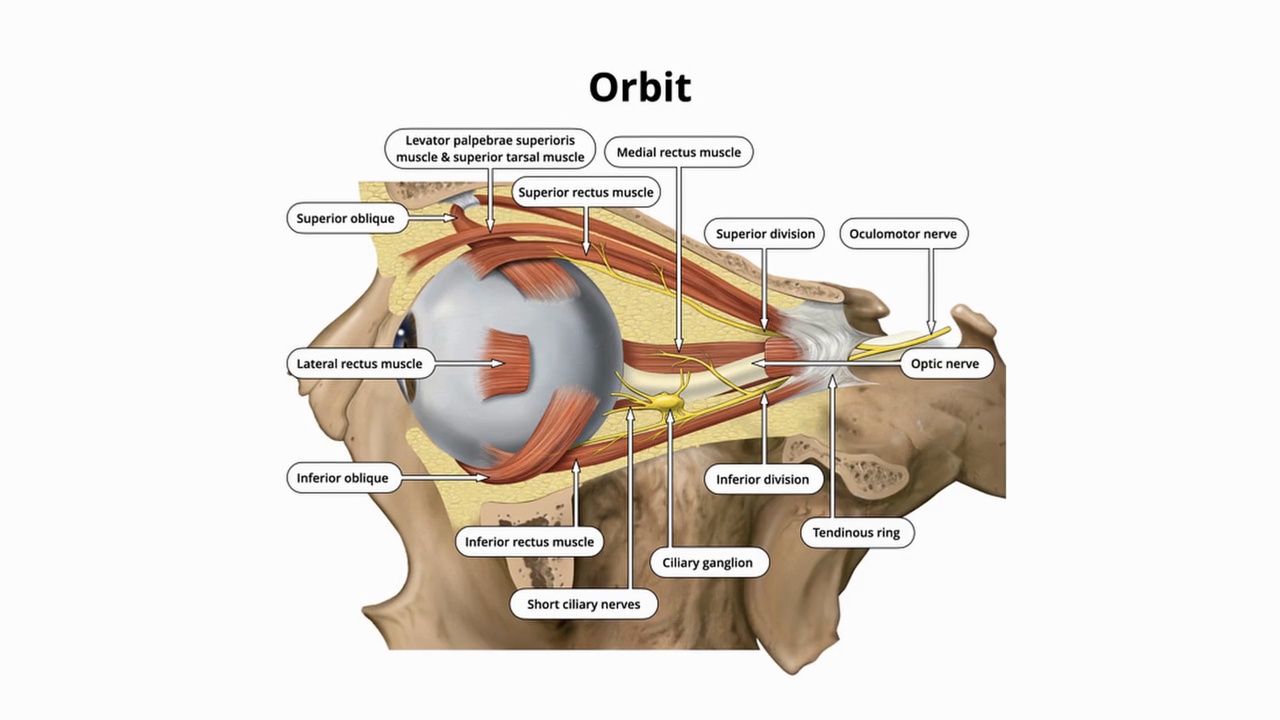
The orbit is one of the most delicate areas of the face. It protects the eye and also contains structures critical for vision, eye movement, sensation, and appearance. A growth in this area may sit near the optic nerve, extraocular muscles, tear gland, eyelids, sinuses, or skull base.
Because of this complexity, orbital tumor management requires a highly detailed approach. Dr. Coby Ray evaluates not only the mass itself but also its potential effects on vision, eye movement, eyelid position, comfort, and facial symmetry.
Treatment planning may involve reviewing imaging, measuring eye position, checking eye movement, evaluating the optic nerve, and determining whether the mass appears benign, suspicious, inflammatory, or cancerous. In some cases, Dr. Ray may coordinate care with radiology, oncology, ENT, neurosurgery, pathology, or other specialists, depending on the suspected tumor diagnosis and location.
How Orbital Tumors Are Diagnosed
Diagnosis begins with a complete history and eye-focused examination. Dr. Ray may ask when symptoms began, whether they are worsening, whether there is pain or double vision, and whether the patient has a history of cancer, thyroid eye disease, autoimmune disease, sinus disease, trauma, or prior facial surgery.
A detailed orbital evaluation may include:
- Vision testing
- Pupil testing
- Eye pressure measurement
- Eye movement evaluation
- Eyelid and facial exam
- Measurement of eye bulging, also called proptosis
- Slit lamp exam
- Dilated eye exam when needed
- Review of prior CT or MRI imaging
Imaging is often a key part of diagnosis. A CT scan may help show bone changes, calcification, sinus involvement, or the relationship between the tumor and the bony orbit. An MRI may provide more detail about soft tissue, the optic nerve, muscles, and deeper orbital structures.
Sometimes imaging gives enough information to support observation or treatment planning. In other cases, a biopsy may be recommended.
Orbital Biopsy: When Tissue Diagnosis Is Needed
An orbital biopsy is a procedure that removes a small piece of tissue from the mass for examination by a pathologist. This can help determine whether the growth is benign, malignant, inflammatory, infectious, or related to another medical condition.
A biopsy may be recommended when imaging does not provide a clear diagnosis, when cancer is suspected, when the mass is growing, or when treatment depends on knowing the exact type of tissue involved.
Depending on the location of the growth, Dr. Ray may access the orbit through a carefully planned incision in the eyelid crease, the inner lining of the eyelid, the side of the eye, or another approach designed to reach the lesion as safely as possible. The goal may be to remove a small tissue sample, remove the entire growth, or reduce pressure on the eye or optic nerve.