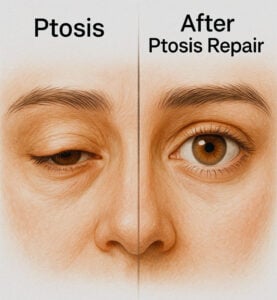
Ptosis repair in Lubbock can lift a drooping upper eyelid, improve a blocked visual field, and help reduce the strain of constantly raising your brows to see clearly. At West Texas Eye Associates, Dr. Coby Ray, MD, FACS, evaluates each patient with a focus on eyelid function, eye comfort, and a natural-looking result.
When an upper eyelid sits too low, it can affect more than your appearance. The lid may cover part of the pupil, narrow your field of vision, make reading or driving more difficult, and create a tired or uneven look around the eyes. Some patients also notice forehead fatigue because they use their brow muscles all day to lift their eyelids.
Ptosis repair helps restore the eyelid to a more open, comfortable position. The goal is to improve the lid’s function while keeping the result balanced with your natural facial features.
What Is Ptosis Repair?
Ptosis repair is a procedure that lifts a drooping upper eyelid by adjusting the muscle that raises the lid. Ptosis, pronounced “toe-sis,” means the upper eyelid sits lower than it should. This can happen because of aging, muscle weakness, nerve issues, trauma, previous surgery, contact lens wear, or a condition present from birth.
In adults, ptosis often develops when the eyelid-lifting muscle stretches or weakens over time. This muscle is called the levator muscle. When it no longer lifts the eyelid effectively, the lid can droop into the line of sight.
Ptosis repair focuses on improving that lift. Depending on your eyelid anatomy and the severity of the droop, Dr. Ray may tighten, advance, or adjust the eyelid-lifting muscle to allow the lid to open to a more natural height.
This makes ptosis repair different from blepharoplasty. Blepharoplasty removes extra eyelid skin. Ptosis repair addresses the muscle position that causes the eyelid itself to sit too low. Some patients need one procedure. Others may need both, depending on what is causing the heaviness.
Why Consider Ptosis Repair
A drooping upper eyelid can make everyday tasks harder. You may notice that your side vision feels limited, your eyes look tired, or your forehead feels sore from lifting your brows all day.
Some patients first notice the problem while reading. Others notice it while driving, working at a screen, watching television, or looking in the mirror. Over time, the low lid position can become more frustrating because it affects both vision and facial expression.
Ptosis repair may help:
Lift the upper eyelid to a more natural position
Improve vision when the lid blocks part of the visual field
Reduce brow strain and forehead fatigue
Improve eyelid symmetry
Create a more alert, rested appearance
Support better comfort during daily activities
The purpose of ptosis repair is not to make your eyes look different or overcorrected. The goal is to help your eyelids function better and look balanced.
Meet Your Surgeon: Dr. Coby Ray
Dr. Coby Ray, MD, FACS, is an oculofacial plastic surgeon at West Texas Eye Associates in Lubbock. Oculofacial plastic surgery focuses on the eyelids, tear ducts, orbit, and surrounding structures around the eyes. That specialty matters for ptosis repair because the eyelids play an important role in vision and eye protection. They need to open well, close properly, spread tears across the eye surface, and support comfortable blinking.
During your evaluation, Dr. Ray may assess eyelid height, eyelid muscle strength, brow position, eye surface health, and the extent to which the drooping lid affects your vision. These details help determine whether ptosis repair, blepharoplasty, or another oculoplastic option is the best fit.
When possible, incisions are placed in natural eyelid creases to help them heal less noticeably. The surgical plan is tailored to your anatomy, your symptoms, and your goals.
Who Is A Candidate For Ptosis Repair?
You may be a candidate for ptosis repair if one or both upper eyelids sit lower than normal and affect your vision, comfort, or appearance. Some patients have ptosis in one eye. Others have it in both.
You may benefit from an evaluation if you notice:
One eyelid sits lower than the other
The upper lid covers part of the pupil
Your side or upper vision feels blocked
You raise your eyebrows to see better
Your forehead feels tired or strained
Reading, driving, or screen use feels harder because of the lid position
Your eyes look sleepy, tired, or uneven even when you feel rested
Your visit may include eyelid measurements, photographs, and visual field testing. These steps help document how the eyelid position affects your vision. If ptosis limits your field of vision, insurance may help cover the procedure. If your goals are cosmetic, your care team can explain self-pay options.
The best way to know if ptosis repair is right for you is to schedule an evaluation with Dr. Ray at West Texas Eye Associates. He can identify the cause of the drooping lid and recommend a plan tailored to your eye health, anatomy, and daily needs.
How To Prepare For Ptosis Repair
Before ptosis repair in Lubbock, your care team will provide you with specific instructions based on your health, medications, and the procedure plan. These directions are important because they can help reduce bleeding, bruising, swelling, and concerns about healing.
In general, your preparation may include stopping certain over-the-counter medications or supplements before surgery, including aspirin-containing products, anti-inflammatory medications, and supplements that may increase bleeding risk. If you take prescription blood thinners or antiplatelet medications, follow your surgeon’s instructions carefully and do not stop them unless your care team tells you to do so.
Your team may also send a prescription ointment to your pharmacy before the procedure. You may be asked to pick it up ahead of time, but wait to use it until after surgery unless instructed otherwise.
On the morning of an in-office procedure with local anesthesia, many patients may eat a light breakfast. Arrive a little early, wear comfortable clothing, and come without eye makeup. It is also a good idea to have someone drive you home, even if it is not strictly required for every patient.
How Ptosis Repair Works
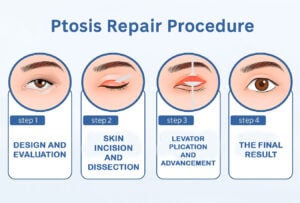
Ptosis repair in Lubbock is usually performed as an outpatient procedure. The goal is to lift the drooping upper eyelid to a more natural position by tightening, advancing, or adjusting the muscle that helps raise the lid.
Before the procedure begins, numbing drops may be placed in the eyes. Your surgeon may mark the eyelid to guide the repair, then numb the treatment area with a local anesthetic. A small incision is often placed in the natural crease of the upper eyelid, which helps keep the incision less noticeable as it heals.
During the procedure, the surgeon locates the eyelid-lifting muscle, called the levator muscle, and adjusts it to improve the eyelid’s lifting power. In some cases, another eyelid muscle may be involved, depending on the type and severity of ptosis. Your surgeon may ask you to open and close your eyes during surgery so the eyelid height can be fine-tuned for better position and symmetry.
Once the eyelid is in the desired position, the incision is closed with stitches. Your care team will clean the area and apply an ointment containing a healing agent. The ointment may blur vision temporarily or melt into the eye, which is expected and safe when used as directed.
Recovery After Ptosis Repair
After ptosis repair, it is normal to have swelling, bruising, tightness, mild discomfort, or temporary irritation around the eyes. These symptoms usually improve during the first week, though full healing may take several weeks.
Your care team may recommend cool compresses or ice packs with a cloth barrier for the first couple of days. You may also be asked to sleep with your head elevated for several days to help reduce swelling. Mild discomfort can often be managed with Tylenol, but avoid aspirin, ibuprofen, Aleve, or other blood-thinning medications unless your surgeon says otherwise.
You will receive specific instructions for using the prescribed ointment, keeping the eyelid area clean, and protecting your incisions while they heal. If your eyes feel dry or scratchy, lubricating drops may be recommended.
Most patients can return to regular non-strenuous activities within a few days, but you should avoid heavy lifting, bending over, strenuous activity, eye rubbing, contact lenses, and eye makeup until your surgeon clears you. Stitches are usually removed at a follow-up visit, often within the first one to two weeks.
When To Call Your Doctor After Ptosis Repair
Call West Texas Eye Associates if something does not feel right during recovery. It is especially important to contact your care team if you notice significant redness, swelling, discharge from the incision, an incision that opens or does not seem to be healing properly, or severe pain that does not improve with prescribed medication.
For urgent post-operative concerns, call West Texas Eye Associates and let the team know you are a post-operative patient in need of assistance. Prompt communication helps your care team guide you through the next step and protect your healing.
Ptosis Repair vs. Blepharoplasty
Ptosis repair and blepharoplasty are different procedures, even though both involve the upper eyelid. The ptosis repair lifts a drooping eyelid by addressing the muscle that raises the lid. The goal is to restore eyelid height, improve function, and help open the visual field when the lid sits too low.
Blepharoplasty removes or adjusts excess eyelid skin and, in some cases, fat. The goal is to reduce heaviness caused by excess skin or create a more refreshed eyelid contour.
Certain patients need ptosis repair. Some need blepharoplasty, and some may benefit from both. Dr. Coby Ray will evaluate your eyelid position, muscle function, brow position, skin, and visual symptoms to recommend the right plan.
Safety and Side Effects
Ptosis repair is a careful eyelid procedure, but, like any surgery, it carries potential side effects and risks. Most patients should expect some swelling, bruising, tightness, mild discomfort, or temporary irritation during early healing.
Some patients may also notice temporary dryness, light sensitivity, blurred vision from the ointment, or mild unevenness while the eyelids settle. These changes often improve as swelling goes down and the tissue heals.
Less common risks can include infection, bleeding, overcorrection, undercorrection, eyelid contour changes, delayed healing, or the need for an adjustment. Your West Texas Eye Associates team will explain the risks before surgery, review your recovery instructions, and monitor your healing during follow-up visits.
You should call your care team if you notice significant redness, worsening swelling, discharge from the incision, an incision that opens, or severe pain that does not improve with medication. Prompt communication helps your surgeon protect your recovery and address concerns early.
Insurance and Payment
Insurance coverage for ptosis repair depends on whether the drooping eyelid affects your vision and meets your plan’s medical-necessity requirements. If the eyelid blocks part of your visual field, your evaluation may include eyelid measurements, photographs, and visual field testing to document the extent of the impact.
If ptosis repair is considered functional, your insurance may help cover the procedure. Is the concern mainly cosmetic? Then the procedure is usually self-pay. Your West Texas Eye Associates team can help verify benefits, review authorization requirements, and explain your expected costs before surgery is scheduled.
Every insurance plan is different, so an evaluation is the best way to understand what may apply to your situation.
Take The Next Step Toward Clearer, More Comfortable Vision
Ptosis repair in Lubbock can lift a heavy upper eyelid, improve comfort, and help restore a more natural lid position. If a drooping eyelid is affecting how you see, how your eyes feel, or how rested you look, request a ptosis repair consultation with Dr. Coby Ray at West Texas Eye Associates or request an oculofacial consultation online today.
FAQ: Ptosis Repair In Lubbock
Ptosis repair is a procedure that lifts a drooping upper eyelid to a more natural position. It usually works by tightening, advancing, or adjusting the eyelid-lifting muscle so the lid opens better and no longer sits too low.
Ptosis repair addresses a drooping eyelid caused by weakness or stretching of the eyelid muscles. Blepharoplasty removes excess eyelid skin. You may need one or both, depending on whether the problem is due to low lid position, excess skin, brow position, or a combination of factors.
Yes, ptosis repair may improve vision when a drooping upper eyelid blocks part of the visual field. Your evaluation may include eyelid measurements, photographs, and visual field testing to help determine how much the lid affects your sight.
Ptosis repair may be performed as an outpatient procedure, and some procedures may be done with local anesthesia and light sedation. Your surgeon will explain the best setting for your procedure based on your eyelid anatomy, health, and repair plan.
Your eyelid area is numbed, and your surgeon may make a small incision in the natural crease of the upper eyelid. The eyelid-lifting muscle is then adjusted to improve lid height. You may be asked to open and close your eyes so the surgeon can fine-tune the position.
Recovery varies, but swelling, bruising, tightness, and mild discomfort are common during early healing. Many patients return to light, regular activities within a few days, while full healing can take several weeks. Your surgeon will give you specific aftercare instructions.
You may need to avoid rubbing your eyes, wearing eye makeup, using contact lenses, heavy lifting, bending over, strenuous activity, and direct sun exposure while your eyelids heal. Your care team will tell you when it is safe to resume normal activities.
Call your doctor if you notice significant redness, swelling, discharge, an incision that opens or does not appear to heal properly, or severe pain that does not improve with medication. For urgent concerns, tell the office you are a post-operative patient needing assistance.
Related Posts
Protect Your Vision: Schedule an Eye Exam
Regular eye exams can help detect changes in your vision and signs of eye disease before they begin affecting your everyday life. Schedule your appointment online or call (806) 792-5900 to take the next step in preserving your sight and maintaining healthy vision.
To provide the best experiences, we use technologies like cookies to store and/or access device information. Consenting to these technologies will allow us to process data such as browsing behavior or unique IDs on this site. Not consenting or withdrawing consent, may adversely affect certain features and functions.
Functional
Always active
The technical storage or access is strictly necessary for the legitimate purpose of enabling the use of a specific service explicitly requested by the subscriber or user, or for the sole purpose of carrying out the transmission of a communication over an electronic communications network.
Preferences
The technical storage or access is necessary for the legitimate purpose of storing preferences that are not requested by the subscriber or user.
Statistics
The technical storage or access that is used exclusively for statistical purposes.The technical storage or access that is used exclusively for anonymous statistical purposes. Without a subpoena, voluntary compliance on the part of your Internet Service Provider, or additional records from a third party, information stored or retrieved for this purpose alone cannot usually be used to identify you.
Marketing
The technical storage or access is required to create user profiles to send advertising, or to track the user on a website or across several websites for similar marketing purposes.